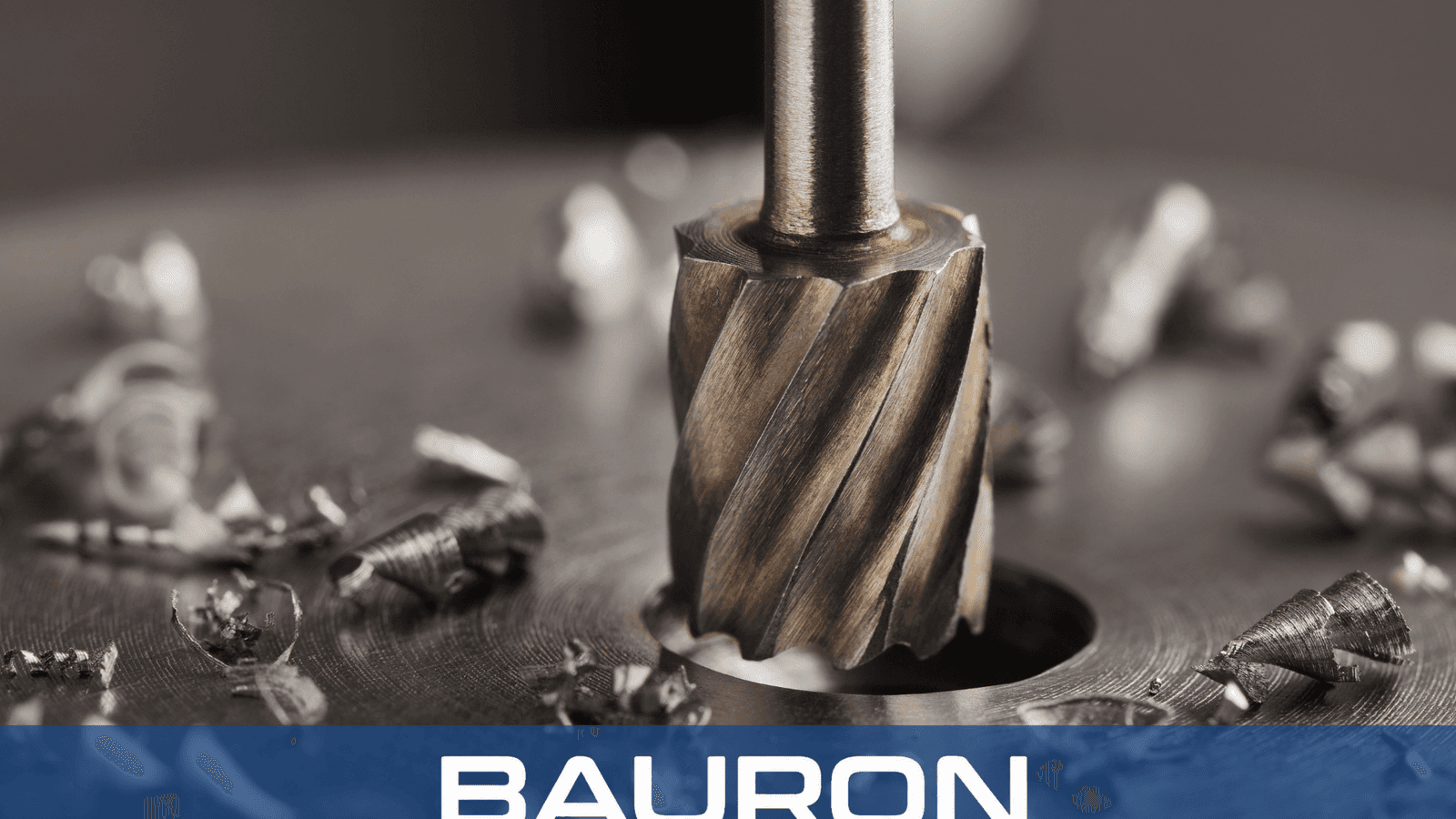
Helical Shearing Action
Angled cutting margins engage the bore wall progressively to support hole roundness and reduce chatter when cutting conditions are suitable.

A spiral flute reamer is a precision hole-finishing cutter whose flutes are angled relative to the tool axis. The helical edges shear progressively and can bridge keyways, cross-holes, and other internal interruptions with less tendency to catch than straight flutes.
Angled cutting margins engage the bore wall progressively to support hole roundness and reduce chatter when cutting conditions are suitable.
Helical flutes span keyseats, cross-drilled oil ports, and axial slots to reduce edge catching.
Left-hand spiral flutes push chips forward in through-holes, while right-hand spiral flutes draw chips back from blind holes.
Ground cylindrical margins size and finish the bore wall as the cutting edges remove the remaining stock.
Helical geometry distributes cutting pressure to help limit chatter and vibration.
Application-matched tooling can target surface finishes of Ra 0.4–0.8 μm while supporting bore roundness and straightness.
Angled flutes bridge keyways and cross-holes to reduce snagging, edge damage, and scoring.
Spiral flutes direct chips away from the active cutting zone to help protect the finished bore wall.
Ground solid carbide or HSS-Co substrates provide edge retention for production reaming.
| Specification | Range / Details |
|---|---|
| Diameter Range | 0.040" to 1-1/2"+; metric 1.0 mm to 38 mm+ available |
| Flute Helix Styles | Left-hand spiral for through-holes or right-hand spiral for blind holes |
| Tolerance Class | H7, H8, or custom +0.0001" / -0.0000" limits |
| Flute Count | 3, 4, 6, or 8 helical flutes, depending on bore diameter |
| Shank Styles | Straight cylindrical, Morse taper, or reinforced CNC shank |
| Operation Type | Precision hole sizing, finishing, and interrupted-bore reaming |
| Material / Coating | Best For | Key Advantage |
|---|---|---|
| Solid Carbide | Stainless steel, titanium, hardened steels, and cast iron. | High rigidity limits deflection and supports close diameter control in stable setups. |
| HSS-Co (Cobalt) | Medium-volume work, interrupted cuts, and ductile steel. | Shock toughness helps reduce cutting-edge chipping during interrupted passes. |
| TiAlN / AlTiN Coating | Alloy steels, stainless steel, and high-temperature alloys. | Thermal hardness protects cutting edges against heat and abrasive wear. |
| DLC / ZrN Coating | Aluminum alloys, copper, brass, and non-ferrous plastics. | Low-friction surfaces help reduce galling and built-up edge. |
Solid carbide emphasizes rigidity and wear resistance, HSS-Co adds toughness for interrupted cuts, and the listed coatings address heat, abrasion, friction, or material adhesion when matched to the workpiece.
Support automated precision hole-finishing routines on 3-, 4-, and 5-axis machines.
Use live or static tool stations for axial reaming of small turned components.
Provide controlled setups for toolroom, fixture, and die hole sizing.
Reams holes with cross-drilled oil ports, keyways, and intersecting internal channels.
Finishes dowel pin holes, bearing journals, and valve bores to specified tolerances.
Finishes bores in hydraulic valve blocks where chip control and bore geometry are important.
Prepares mounting holes for structural bushings and actuators.
Helical flutes engage progressively and bridge cross-holes, keyways, and interrupted cuts with less tendency to catch, supporting bore roundness and finish.
Choose a left-hand spiral with right-hand cut for through-holes to push chips forward. Choose a right-hand spiral for blind holes to draw chips back toward the entrance.
A starting guideline is approximately 2% to 3% of the hole diameter, such as 0.010" to 0.015" on a 0.500" hole. Final allowance should be validated for the material, diameter, and setup.
Micro-grain solid carbide tools with TiAlN or AlTiN coatings can be specified for pre-hardened steels and nickel alloys in the stated 55–60 HRC range, subject to the workpiece and process.
Custom options can include non-standard diameters, helix angles, chamfer leads, extended-reach shanks, and wear coatings based on manufacturing drawings.
Bauron provides design and engineering support for custom geometry, helix direction, flute configuration, substrate, and coating selection. Share the bore dimensions, interruptions, workpiece material, and finish requirements for review.
Talk to Engineering